

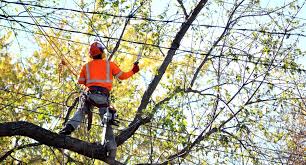
But in Chatswood, it is rarely that clean.
Between local council controls, urban tree canopy targets, heritage overlays, and the way tree “removal” can include heavy pruning, you can easily get stuck in a loop of quotes, forms, and conflicting advice from neighbours. And the kicker is this. You might be allowed to remove it. You might not. Or you might be allowed to remove it only if you replace it, keep a habitat hollow, protect a neighbouring tree’s roots, and do the job in a specific window.
This is where Chatswood tree removal services become more than just someone turning up with a chainsaw. A qualified arborist in Chatswood can explain what is actually possible, what is likely to receive council approval, and what could later turn into a compliance issue if handled incorrectly.
Let’s go through what these “urban canopy rules” really mean in practical terms, and how they affect your options when you are trying to remove a tree.
Why Chatswood cares so much about canopy
Urban canopy is basically the total cover of tree leaves when you look down from above. Councils track it because canopy changes local temperatures, stormwater run off, wildlife corridors, and even how liveable streets feel in summer. It is not just aesthetics.
In dense suburbs like Chatswood, canopy can drop quickly when blocks get redeveloped. One old backyard tree goes, then the next, then suddenly the street feels harsher. More glare. More heat. Fewer birds. Councils know this pattern.
So the rules are written to slow down unnecessary loss. Which sounds reasonable. Until it is your tree, your driveway, your cracked retaining wall, and you are the one paying for repairs.
That tension is basically the whole story here.
Tree removal is not always “removal” in the eyes of council
A lot of owners get caught here.
You think removal means cutting the whole thing down. But many councils treat severe pruning, lopping, topping, and even cutting major limbs as “tree removal” if it damages the tree long term or changes its structure dramatically.
So if you tell a contractor “just take 40 percent off the crown”, you might still need approval. And if you do it without approval, council may treat it as unlawful removal, even though the trunk is still standing.
A good Arborist in Chatswood will usually flag this early because they have seen the same mistakes repeated. People assume “it is my yard, I can prune it”. Sometimes you can. Sometimes you really cannot.
What typically triggers approval requirements
Specific controls vary, but in practice, these are the things that often trigger the need for council approval or at least careful checking:
- The tree is above a certain height or trunk diameter
- The tree is part of a canopy protection area or streetscape
- The tree is listed as significant, heritage, or part of a heritage setting
- The tree sits near drainage lines or bushland interfaces
- The removal is linked to a development application
- The work includes major limb removal that changes the tree’s form
Even if your exact scenario is not on that list, it can still fall under general vegetation protection rules. This is why “my mate said it is fine” is not a plan.
The difference between “risk” and “nuisance” matters a lot
Here is a blunt truth.
Councils are generally more responsive to genuine risk than to inconvenience.
If the tree is demonstrably hazardous, unstable, structurally compromised, or likely to fail, you have a clearer pathway. If it is “messy”, “too big”, “drops fruit”, “blocks my view”, or “makes the yard dark”, you might be looking at a harder sell.
This is where the paperwork matters, and where a Arborist in Chatswood can make or break your application because they can document defects properly.
A proper arborist report is not just “tree looks bad”. It will typically cover things like:
- Species and estimated age
- Structure and defects (cracks, cavities, deadwood, included bark, root plate movement)
- Targets (house, neighbour’s property, pedestrian areas)
- Likelihood of failure and consequence
- Management options (prune, cable brace, monitor, remove)
And yes, councils can still say no. But a solid report shifts the conversation from opinions to evidence.
Native, exotic, and “weed” species are not treated equally
This one surprises people.
In many cases, a declared weed species or invasive tree is easier to remove than a native canopy tree. But it is not always automatic. Some weeds still require approval depending on size, location, or if they are acting as canopy cover in a sensitive area.
On the flip side, certain native species are protected more strongly. Not necessarily because they are pretty, but because they contribute to long term canopy goals and habitat.
If you are dealing with a tree you believe is a pest or a “self seeded problem”, it is still worth checking before removal. A Arborist in Chatswood can identify the species correctly, which sounds basic, but misidentification happens constantly and it can derail an application. Discover more about tree identification resources.

Your removal options, realistically, in a canopy focused suburb
When people say “what are my options”, they usually mean “how do I get rid of this thing”. But in Chatswood, the options tend to fall into a few common paths.
1. Straight removal with approval
This is the cleanest outcome. It typically happens when the tree is dead, dying, dangerous, or clearly unsuitable for the site. If approved, removal is allowed and you follow conditions.
Conditions can include stump grinding, protection of nearby vegetation, and sometimes replacement planting.
2. Removal approved, but only with replacement planting
This is extremely common in canopy controlled areas.
You remove one mature tree, you must plant one or more replacements. Sometimes they specify pot size, species type, or location. Sometimes it is “one advanced tree” or “two natives”. It depends.
If you are trying to avoid future problems, talk through replacement choices with a Arborist in Chatswood. Planting the wrong species in the wrong spot is basically how this whole cycle repeats in ten years.
3. Partial canopy reduction instead of removal
Sometimes council will push back and say “retain the tree, prune it”. They might approve a reduction, deadwood removal, selective limb removal, or clearance pruning around structures.
This can help, but it can also be a short term patch if the tree is fundamentally too large for the site. Also, bad pruning can create more risk over time. So the method matters.
4. Removal without approval, but only under specific exemptions
There can be exemptions for immediate danger, dead trees, or emergency works after storms. But these exemptions usually come with a catch. You need documentation, photos, sometimes an arborist statement, and you need to prove it actually met the exemption criteria.
This is another moment where calling an Arborist in Chatswood first can save you, because they can record evidence before the tree is altered. Once it is cut, it is hard to prove what it looked like.
5. Development related removal through a DA
If you are renovating, building, adding a pool, or doing major landscaping, tree removal might be handled under a Development Application process. That means tree impacts are assessed alongside everything else.
This can be good because it is one approval pathway, but it can also be stricter because they look at cumulative canopy loss and set replacement conditions.
Neighbour disputes and boundary trees get messy fast
Trees do not respect fence lines.
If the trunk is on the boundary, or if major roots and limbs cross into a neighbour’s property, you can end up in disputes about pruning, removal, liability, and damage.
Even when a tree is fully on your property, removing it can impact a neighbour’s amenity, privacy, or shade, and they might object. In some cases, they might lodge complaints if work starts without clear approval.
A Arborist in Chatswood can help by providing neutral, technical assessment. That matters because neighbour disputes tend to be emotional and vague. “It is dangerous” versus “it has always been fine”. A report pulls it back into facts.
What councils usually look for in an application
If you are applying to remove a tree, think like the assessor for a second. They are balancing private needs with public canopy outcomes. So they are typically looking for:
- Clear reason for removal (risk, health decline, structural damage, unavoidable building footprint)
- Evidence (photos, arborist report, engineer report if relevant)
- Whether alternatives exist (prune, root barrier, redesign)
- Canopy impact (size, species, local canopy coverage)
- Replacement plan (species choice, size, planting location)
This is why generic one line reasons like “tree too big” often go nowhere. But a structured submission with an arborist report attached, that usually reads differently.
A competent Arborist in Chatswood often knows what language and detail tends to get traction, because they have seen which applications get approved and which ones get rejected.
The hidden trap: “doing nothing” can also be risky
Some owners decide to wait. Maybe they are unsure about approvals, or they think “I will deal with it later”. But if a tree is already showing failure signs and you ignore it, that can create liability issues if it falls and damages property or hurts someone.
Also, trees do not get easier to remove as they get larger, and costs do not go down. If you suspect structural issues, it is worth getting it assessed early.
An Arborist in Chatswood can sometimes recommend a monitoring plan instead of removal. Like periodic inspections, targeted pruning, or reducing sail area. Not every problem needs a chainsaw solution. Learn more about the top 5 reasons Hornsby homeowners call an arborist each year.
How to choose an arborist for a removal related situation
If your main goal is removal approval, you want someone who understands both tree biology and compliance realities. A few practical checks:
- Ask if they can provide a written arborist report suitable for council
- Ask if they have experience with local council applications and common conditions
- Confirm they carry insurance and have proper qualifications
- Be wary of anyone who guarantees approval before seeing the tree
- Be wary of anyone who jumps straight to removal without discussing alternatives
A good Arborist in Chatswood will usually ask a bunch of questions first. Site constraints, your plans, the tree’s history, nearby structures, even drainage patterns. That is a good sign.
A simple way to think about your odds
Not perfect, but useful.
Your chances of straightforward approval tend to be higher when:
- The tree is dead, dying, or structurally compromised
- There is clear evidence of damage risk to buildings or infrastructure
- The species is problematic or unsuitable for the location
- Replacement planting is feasible and you are willing to do it
Your chances tend to be lower when:
- The reason is mostly amenity based (light, leaves, view)
- The tree is healthy and provides strong canopy cover
- The area is sensitive for canopy targets or heritage streetscape
- You want to remove multiple trees at once without a strong rationale
Again, not a guarantee. But it helps set expectations before you spend money and time.
Where people accidentally make it worse
A few common missteps I see come up again and again in Chatswood:
- Hiring a “tree lopper” who does major pruning without approvals
- Assuming a storm event automatically grants removal rights forever
- Removing first, asking later, then trying to justify it after the fact
- Submitting an application with no evidence beyond a short description
- Planting replacements that are too small, wrong species, wrong location
- Not documenting defects before work begins
If you want to keep it simple, do this instead.
Get a site visit. Get the tree assessed. Get advice on the approval pathway. Then decide.
That is basically the calm, boring process that avoids the expensive headaches.
Final thoughts
Chatswood’s canopy rules are not there to annoy you personally, but they can definitely feel that way when you are staring at a tree that is damaging your property or making your block unusable.
The good news is you usually do have options. Removal, staged reduction, targeted pruning, replacement planting, or a documented hazard pathway. The bad news is you need to handle it properly, because the line between “maintenance” and “unauthorised removal” can be thinner than most people think.
If you are unsure, start with an Arborist in Chatswood and get clarity first. It is often the fastest way to stop guessing and figure out what you can actually do next.