

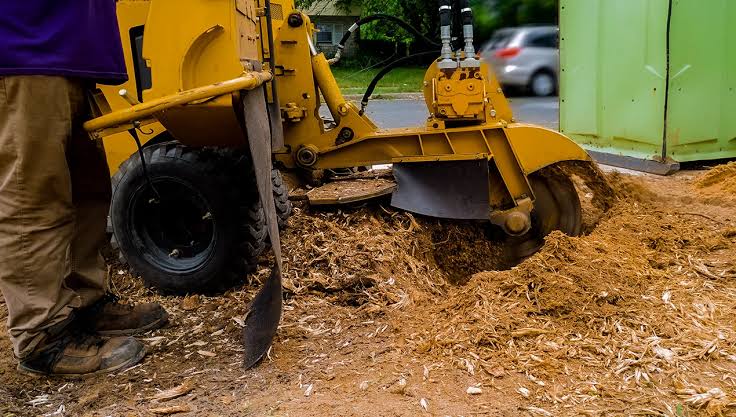
Grinding has become the default way to deal with stumps for one simple reason: it is quick and it barely disturbs the rest of the yard. A rotating wheel fitted with hardened cutting teeth reduces the stump and its surface roots to coarse mulch, usually in well under two hours for a residential job. Stump grinding Sydney crews handle everything from a hedge stub in a courtyard to a metre-wide fig plate, and the whole appeal is that you get your ground back the same day without an excavator carving a road across the lawn.
The trade-off is depth. Grinding removes the stump and major surface roots to somewhere between two and four hundred millimetres below grade, leaving deeper structural roots to decay naturally over the following years. For turf, garden beds, and general use that is entirely adequate. For a slab, footing, or pool shell it is not, because settlement follows as the remaining timber breaks down. Knowing the plan for the ground before booking stump grinding Sydney work is what keeps you from paying twice.
Machine Types and Why Access Decides Everything
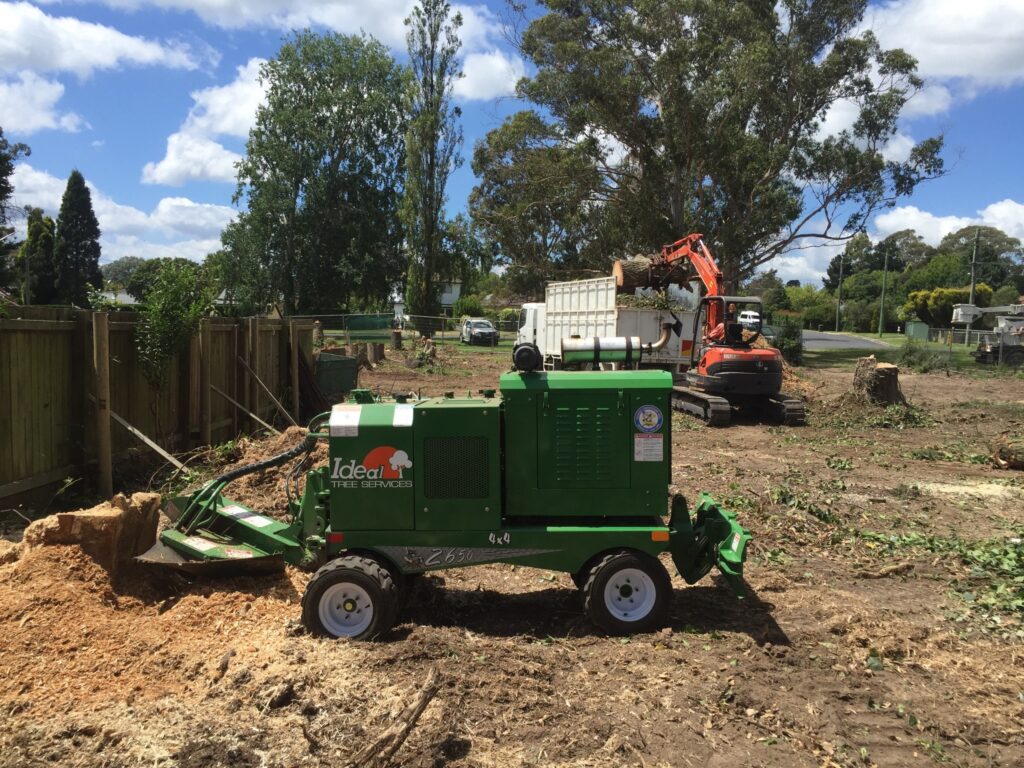
Grinders come in tiers. Compact walk-behind units fit through a standard seven hundred millimetre gate and handle small to medium stumps, which covers most suburban jobs. Mid-size tracked machines need wider access but chew through large plates far faster. Big self-propelled and tow-behind units are reserved for open sites and major stumps. On Sydney’s older blocks, gate width, step-downs, and steep rear yards frequently dictate the machine, and the machine dictates the time. Send photos of the access route when requesting a quote and you will get a far more accurate price.
The Process Step by Step
A professional stump grinding Sydney job runs to a sequence built around recognised safe work practices. The operator locates underground services and confirms the work area, then clears loose debris and exposes the stump collar, often cutting it lower with a saw first. Rock and embedded metal are removed where possible, since either will destroy teeth. Guarding and mats go up to contain flying debris and protect windows, cars, and paving. Grinding then proceeds in passes, working across the stump and out along surface roots. Finally the grindings are either removed or spread, and the void is backfilled and levelled.
- Service location checks before the machine starts
- Debris guarding and mats to protect glass, cars, and paving
- Progressive passes across the stump and surface roots
- Grindings removed or spread as mulch, by agreement
- Backfill with topsoil, compacted and levelled
Grinding Depth, Backfill and Settlement
Agree the finished stump grinding Sydney depth before the machine starts, because it determines what you can do with the ground. Two hundred millimetres below grade is enough for turf. Three to four hundred suits garden beds where you want room for planting. Anything structural needs a different method entirely, since remaining timber will decay and settle under a slab. Backfill matters just as much as depth: grindings alone compact poorly and continue to break down, so a mix weighted toward quality topsoil, placed and compacted in layers, gives a far more stable surface. Expect some settlement regardless over the first six to twelve months, and plan to top up once before laying turf or paving.
Sydney Soils and What Slows a Job Down
Local ground conditions have a real effect on stump grinding Sydney timeframes. Sandstone country means embedded rock that blunts teeth and forces the operator to work around obstructions. Sandy soils are abrasive and wear cutting edges quickly. Heavy clay in the western suburbs is dense and grabs the wheel. Older properties frequently hide surprises underground: brick rubble from previous builds, buried fence footings, and long-forgotten paving. All of it slows the work and can require tooth changes mid-job, which is why quotes on similar-sized stumps in different suburbs are not always comparable.
Safety Around the Machine
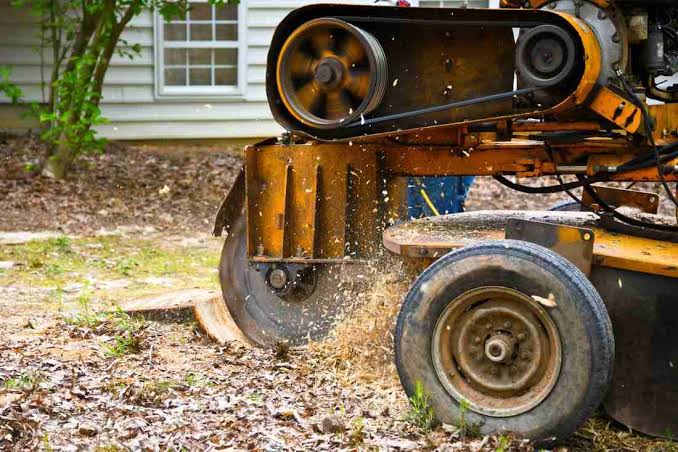
These machines look tame and are not. A cutting wheel spinning at speed ejects timber and stone with real force, which is why guarding, mats, and exclusion zones are standard rather than optional. Published industry safety checklists call out stump grinder guarding, pre-start inspection, and controlled work areas as distinct items, alongside the same requirements for chainsaws and chippers. Expect to be asked to move vehicles, close windows, and keep children and pets indoors for the duration. Operators who skip the setup are the ones who put a rock through a window.
Costs and Booking
Pricing generally combines a minimum call-out with a rate scaled to stump diameter, adjusted for access and soil conditions. Multiple stumps in one visit are substantially cheaper per stump because mobilisation is fixed. The two things to confirm in writing are whether grindings are removed and whether the hole is backfilled with topsoil, since those are the usual exclusions behind a suspiciously low figure. Best value comes from booking stump grinding Sydney work while the tree crew is still on site, which avoids a second call-out entirely. Neighbours with stumps of their own are worth a quick conversation too, since a shared visit splits the call-out across both properties.
Putting the Grindings to Work
You will be left with a surprising volume of mulch, often several barrow loads from a single medium stump. It makes decent path or garden bed mulch once aged, though fresh grindings will lock up nitrogen if dug into soil, so keep them on the surface and away from trunks and stems. Avoid using grindings from a diseased tree around susceptible plants. If the volume is more than you want, agree removal in the quote rather than discovering a mound on the lawn after the truck has left. Aged for six to twelve months in a heap, the same material breaks down into a genuinely useful soil conditioner, so a spare corner of the yard can turn a disposal cost into free mulch for next season.