

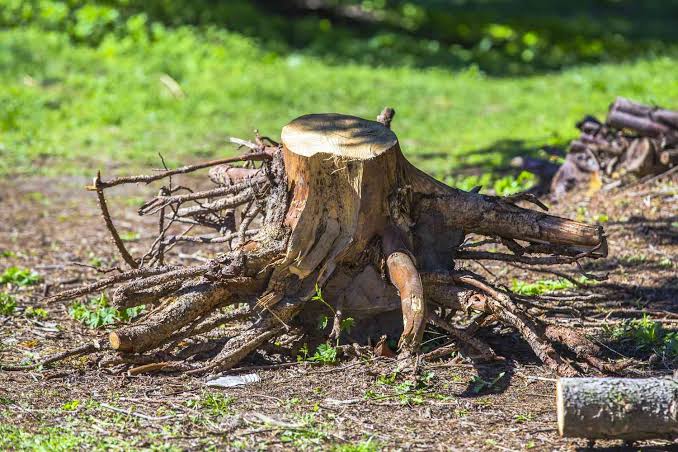
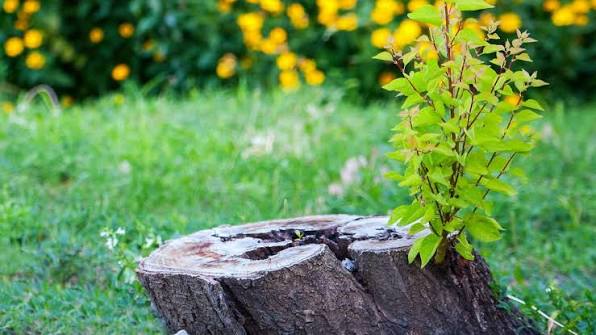
Plenty of people leave a stump in the ground assuming it will quietly rot away. Some eventually do, over five to fifteen years depending on species and soil, and the interim is rarely quiet. A decaying stump hosts termites, borers, and wood-decay fungi within metres of your house frame, fence posts, and other trees. It sinks unevenly, creating a genuine trip hazard hidden in lawn. Many species also send up suckers repeatedly. Tree stump removal is the step that closes the job out and stops those problems before they start.
Understanding the root system explains why removal is more involved than it looks. Contrary to the deep taproot most people picture, mature trees generally develop a broad, shallow plate of structural roots radiating well beyond the canopy edge, concentrated in the top half metre of soil. That plate is dense, heavy, and frequently interwoven with irrigation lines, sewer pipes, and conduits. Effective tree stump removal has to deal with that architecture, which is why professionals locate services before any machinery starts turning.
Deciding How Much Has to Come Out
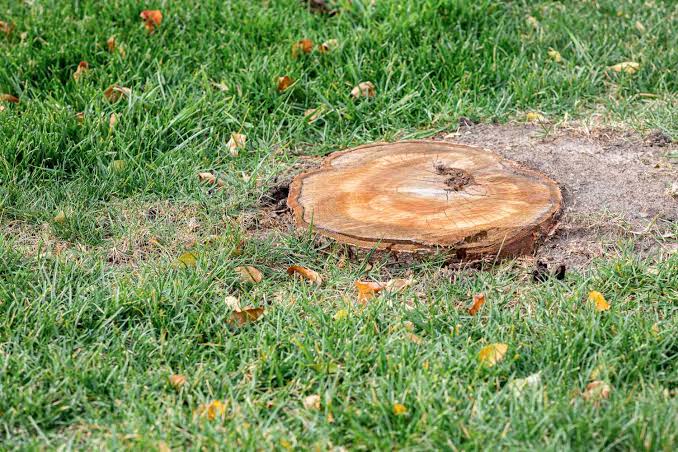
The right depth depends entirely on the site’s next use. Returning the area to lawn needs perhaps two to three hundred millimetres of clearance below grade so turf can establish over topsoil. New garden beds need more, since planting into a congested root zone is frustrating work. Anything structural, whether a slab, footing, pool shell, or paved area, needs the root plate genuinely gone to avoid settlement as remaining timber decays. Deciding this upfront prevents the common and expensive mistake of grinding a stump and then discovering the plan requires excavation.
Comparing the Available Methods
Grinding is the default: a cutting wheel reduces the stump and surface roots to mulch, fast and with minimal disruption, leaving deeper roots to decay naturally. Excavation pulls the whole plate out with a machine, the only reliable approach where structures are planned or suckering is aggressive. Chemical treatment accelerates decay over months for stumps nobody needs cleared soon. Manual digging still suits small stumps. Operators with formal arboriculture training match the method to the site rather than the machine, and any contractor recommending the same approach for every stump is describing their equipment rather than assessing your requirement.
- Grinding for lawn, garden beds, and low-disruption clearance
- Excavation where footings, paving, or pools are planned
- Chemical treatment for non-urgent, low-access stumps
- Service location and utility checks before machinery arrives
- Backfill, compaction, and topsoil as part of the finished job
What Happens to the Roots Left Behind
Grinding deals with the stump and surface roots, and the rest of the system stays where it is. Those roots decay gradually, colonised by fungi and soil organisms, over a period that ranges from about five years for softwoods in warm, moist soil to well over a decade for dense hardwood in dry ground. As they break down, the soil above them settles, which is why a ground stump often develops a shallow depression a year or two later that needs topping up. Decaying roots also draw nitrogen from the surrounding soil, so plants installed directly over the old root zone frequently underperform for the first couple of seasons unless the bed is fed accordingly.
Timing: Sooner Is Cheaper
The best moment for tree stump removal is immediately after felling, while the crew and machinery are already on site. Doing it later means a second mobilisation fee, and mobilisation is one of the larger fixed costs. Fresh stumps are also easier to work: the timber has not hardened or dried, the site is already cleared, and grindings can be blended into the existing debris load. Waiting a year means grinding a harder stump on a lawn that has grown back over the roots, with grass to repair afterward. If budget is the constraint, at least ask for the stump to be cut as low as possible during felling so the later grind is quicker and cheaper.
Safety and Why DIY Attempts Fail
Stump grinders are heavy, powerful machines that throw debris hard and behave unpredictably on slopes or over hidden rock. Published industry safety checklists list stump grinder guarding, exclusion zones, and pre-start checks as specific items, which reflects how often these machines injure people. Hidden hazards make it worse: an unmarked irrigation line is an inconvenience, an electrical conduit or gas service is a genuine emergency. Hired equipment also lacks the operator judgement that keeps the cutting wheel out of trouble, which is why weekend attempts so often stall halfway.
Costs and Comparing Quotes
Diameter sets the baseline and access usually decides the final figure. A machine that fits through a standard side gate is routine; hand-carrying gear down a steep block, or craning a grinder over a house, is not. Hardwoods grind slowly, and rocky or sandy soil wears teeth fast. Multiple stumps in one visit always lower the per-stump rate. Check whether the quote includes removing the grindings and backfilling with topsoil, because leaving both on site is the omission behind most unusually cheap prices.
Getting the Site Ready for Its Next Life
Fresh grindings are not planting medium. High in carbon, they tie up nitrogen as they break down, which is why anything planted straight into them yellows and stalls. Remove the bulk, backfill with quality topsoil in compacted layers, and expect to top up in a few months as the remainder settles. Leave a season before planting a replacement, and offset the new tree a metre or two where possible. Done properly, tree stump removal turns dead ground back into usable garden rather than a patch that never quite thrives. If the area is destined for turf, lay quality topsoil at least one hundred millimetres deep so roots have something to work with, and water consistently through establishment. Where a garden bed is planned, mixing in compost and a slow-release nitrogen source helps offset whatever grindings remain in the profile.