

Once a tree is felled, the part that causes ongoing trouble is the part left in the ground. A stump is a trip hazard, a mower killer, and an open invitation to termites, borers, and decay fungi that spread happily into nearby timber and healthy roots. Many species will also throw suckers from a live stump for years, effectively regrowing the tree you just paid to remove. Professional stump removal closes the job out properly, and it decides what you can build, plant, or pave over that ground afterward.
The choice of method depends on what happens next on that site. Turning the area back into lawn is a very different requirement from pouring a slab or installing a pool, and the depth of removal has to match the plan. Underground services complicate things further, because stumps sit exactly where irrigation lines, sewer pipes, and conduits tend to run. A professional will check service locations before machinery arrives, which is the step DIY attempts usually skip right before something expensive gets cut.
The Main Stump Removal Methods
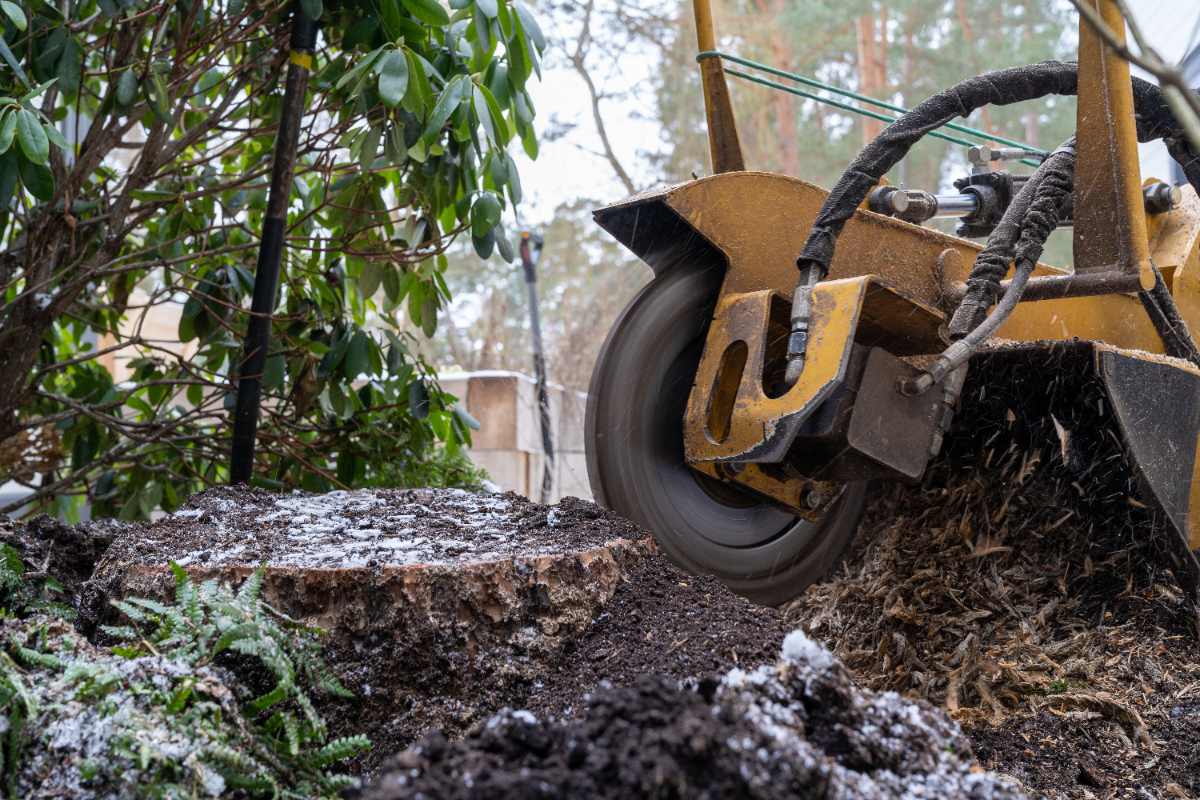
Four approaches dominate. Grinding uses a rotating cutting wheel to chew the stump into mulch, typically to a depth of 200 to 400 millimetres. Excavation drags the entire root plate out with a machine, leaving a large void but no remaining timber. Chemical treatment accelerates decay over months and suits stumps nobody is in a hurry to clear. Manual digging remains viable for small stumps with shallow roots. Each has a legitimate use case, and any operator who only ever recommends one method is telling you about their equipment, not your site.
Grinding: Fast, Tidy, and Usually the Default
Grinding wins on speed and disruption. Most residential stumps take between twenty minutes and two hours, and the surrounding lawn survives largely intact. The by-product is a pile of mulch you can spread on garden beds or have carted away. The trade-off is depth: grinding removes the stump and major surface roots but leaves the deeper root system to decay naturally over several years. That is fine for turf and planting beds, and inadequate under a slab. Grinding also throws debris hard, which is why operators fit guarding and keep everyone well back. Published industry safety checklists list stump grinder guarding and exclusion zones as specific inspection items for good reason.
Excavation for Complete Extraction
When the ground needs to be genuinely clear, excavation is the answer. An excavator or backhoe removes the stump and the bulk of the root plate in one operation, which is the only reliable route for large specimens, aggressive suckering species, or footings and pool shells going in afterward. Expect a substantial hole requiring imported fill, real machine access, and more site disturbance than grinding. Cost sits higher, but so does certainty. On any site where regrowth or settlement would be a serious problem, thorough stump removal by excavation is money well spent. Check machine access and gate widths first, because an excavator that cannot reach the stump changes the plan entirely.
- Grinding for fast, low-disruption clearance under lawn and garden beds
- Excavation where footings, paving, or pools are planned
- Chemical treatment for stumps with no deadline pressure
- Service location checks before any machinery starts
- Backfill, topsoil, and compaction as part of the finished job
Regrowth, Suckering and Species Behaviour
Species behaviour decides how thorough the work needs to be. Many eucalypts, willows, poplars, camphor laurels, and privets will shoot enthusiastically from a live stump or from severed roots, sending suckers up through lawn and garden beds for years afterward. Others, including most conifers, will not reshoot at all once felled and simply decay in place. That difference matters when choosing a method: for a vigorous suckering species, grinding the visible stump often leaves enough live root material to keep the problem alive, so either excavation or a follow-up treatment program is required. Ask which category your tree falls into before agreeing to the cheapest option.
What It Costs and Why Quotes Differ
Diameter is the headline number, but access usually decides the price. A grinder that fits through a standard gate is a routine job; one that needs a crane lift over a house, or hand-carried gear down a steep block, is not. Hardwood species grind slower than softwoods. Stumps in rocky or sandy soil dull teeth faster, and root plates full of embedded stone slow everything down. Multiple stumps in one visit always reduce the per-stump rate, since mobilisation is a fixed cost. Confirm whether mulch removal and backfill are included, because those two omissions explain most suspiciously cheap quotes.
Preparing the Site for Its Next Use
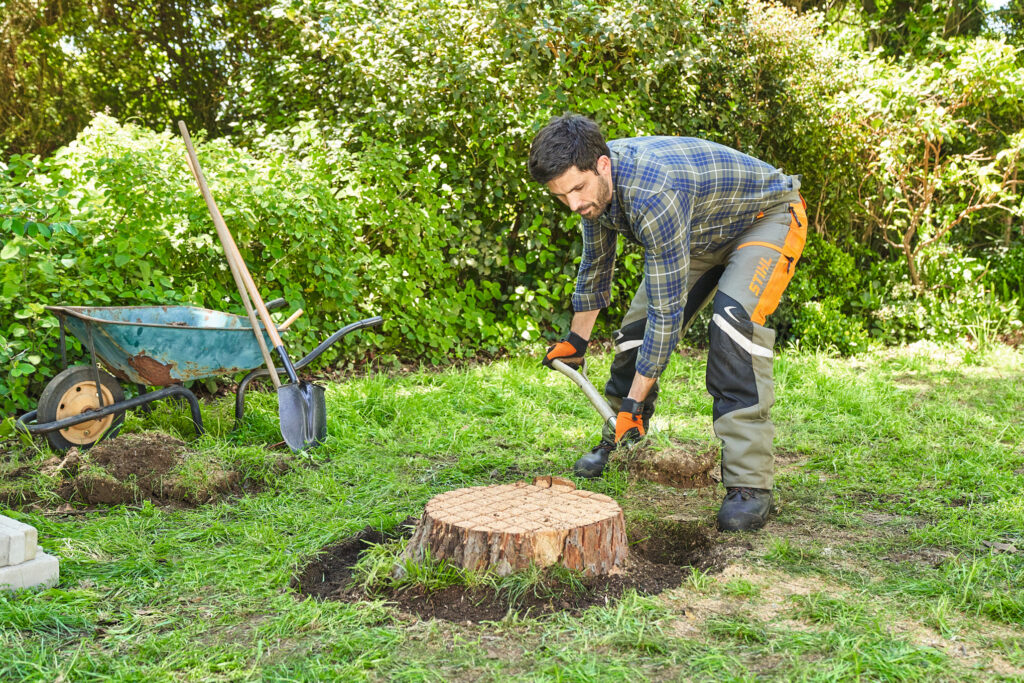
The ground left behind after stump removal is not immediately plantable. Fresh mulch is high in carbon and will lock up nitrogen as it breaks down, so anything planted straight into it tends to yellow and stall. Remove the bulk of the grindings, backfill with quality topsoil, compact in layers to limit settlement, and expect to top up in a few months as the remaining material decomposes. Give it a season before planting a replacement tree in the same spot, and offset the new planting a metre or two if you can, since the old root zone stays congested for years.
Why Professional Beats Hired Equipment
Hiring a grinder for a weekend looks economical until you factor in what can go wrong. These machines are heavy, awkward on slopes, and unforgiving of inattention. Operators who have completed formal arboriculture training understand cutting depth, root architecture, and how to work safely around services, which is why professional stump removal usually finishes in a fraction of the time with none of the collateral damage. Add insurance cover for the neighbour’s fence and the irrigation line, and the professional option is normally the cheaper of the two once you count the risk.